


Lossless audio has become one of the buzziest terms in the world of music streaming. Apple Music offers it, as do Amazon Music, Tidal, Qobuz, and others. It’s positioned as a big leap in audio fidelity—a way to hear your favorite tracks the way artists and engineers intended.
Lossless audio does sound better than regular lossy audio. More detail, greater clarity, and a wider dynamic range all await the patient listener. But for all the hype, here’s the cold truth: chances are, you’re not getting the full lossless experience, even if you’re paying for it.
What Is Lossless Audio?
The term “lossless” refers to a type of audio compression that preserves all the original information from a studio recording. This is in contrast to “lossy” formats like MP3 or AAC, which discard data during compression to save on file size. For decades, lossy audio was the standard for streaming and downloading because it balanced decent sound quality with smaller files—an essential trade-off back when mobile data and storage space were limited (and expensive).
However, those limitations are no longer as pressing. In many countries, people have access to fast internet, ample onboard storage, and unlimited data. That’s one reason why streaming music services like Apple Music and Amazon Music have begun offering lossless audio at no extra cost. It’s a relatively easy way to differentiate their streaming services and attract quality-conscious listeners.
Simon Cohen/How-To Geek
Lossless can sound significantly better than lossy, but only under the right conditions. If you tend to do most of your listening in busy environments, like public transit, urban sidewalks, or noisy cafes, you probably won’t be able to appreciate the extra level of detail that lossless provides.
However, if you have a dedicated listening setup at home, where you can keep noise to a minimum, I think you’ll become aware of lossless’s benefits. Many people who have switched from a lossy streaming service like Spotify to a lossless service like Apple Music have said they can hear the difference.
Do You Only Need a Lossless Streaming Service?
While subscribing to a lossless-friendly service is the first step, it’s far from the last. One of the biggest myths about lossless audio is that having access to it means you’re hearing it.
Thanks to their undeniable convenience, wireless earbuds and headphones are how most people listen to music these days. As convenient as Bluetooth is, it wasn’t built for lossless audio. Because Bluetooth connections are bandwidth-limited and can easily be disrupted by nearby sources of interference, Bluetooth audio uses its own version of lossy compression on your music before it ever gets sent to your headphones. The moment your lossless audio travels from your phone to your earbuds, it’s no longer lossless.
Simon Cohen/How-To Geek
Bluetooth compression is determined by the codecs supported by your phone and your wireless headphones. Some, like LDAC, aptX HD, and aptX Adaptive, are so effective that few listeners can tell they’re lossy. But these codecs aren’t universally supported.
Apple’s iPhone, for instance, only uses the AAC codec over Bluetooth. AAC can sound pretty good, but it’s still lossy and notably inferior to the codecs mentioned above. In other words, your Apple Music subscription may deliver lossless files to your iPhone, but your iPhone throws a chunk of that information away before it reaches your ears.
Wi-Fi Isn’t Always Better
Generally speaking, if you’re using Wi-Fi for audio (speakers like Sonos, Denon Home, or Bluesound), you’re getting lossless audio. But there’s a catch, and again, it’s an Apple thing. Apple’s wireless protocol, AirPlay 2, which operates over Wi-Fi and is often regarded as a higher-fidelity alternative to Bluetooth, doesn’t support lossless audio. In most cases, it compresses lossless streams to AAC, which means you’re likely no better off in terms of quality.
Kris Wouk/How-To Geek
Plus, don’t forget to check your app’s streaming settings. Many streaming music services don’t enable lossless by default. On Apple Music, for example, you have to manually go into the settings and switch on lossless or hi-res lossless. Otherwise, you’re just getting standard AAC—again, perfectly fine, but not the reason you signed up.
It’s Still a Wired World
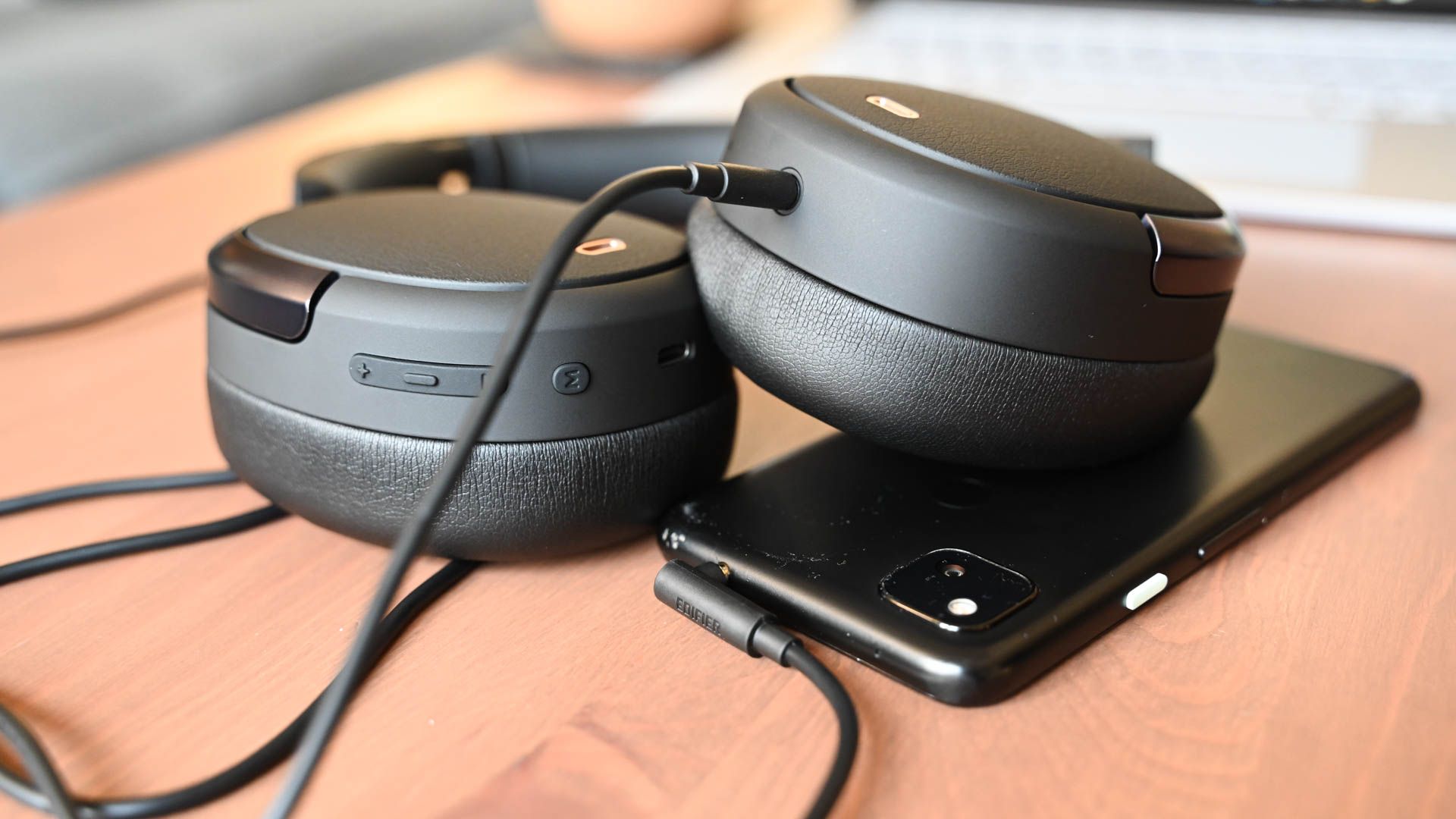
Sadly, in an era where everything is going wireless, the best way to experience lossless audio is to plug in. Wireless headphones with an available USB audio connection, like the Beats Studio Pro, Bose QuietComfort Ultra Headphones, or Bowers & Wilkins Px7 S2 and S3, are the most convenient option. These cans come with a USB-C-to-USB-C cable that plugs directly into an Android phone, iPhone 15 (or newer), or a computer, for a lossless connection that supports up to hi-res audio quality.
Alternatively, wired headphones and earbuds (or wireless cans with analog inputs) can let you hear lossless too, but they need some help. Unless your phone is one of the few that still has a headphone jack, you’ll need an external USB-C (or Lightning) to 3.5mm adapter.
Lucas Gouveia / How-To Geek
However, there’s also a world of much higher quality, dedicated digital-to-analog converters (DACs). These devices typically feature higher-quality chipsets, resulting in less distortion and quieter operation. They can also process lossless audio up to 24-bit/96kHz (and above), which is considered true hi-res audio.
At just $59, Ifi’s Go Link is an excellent entry-level DAC that ships with USB-A-to-USB-C and Lightning-to-USB-C adapters, making it highly versatile. It even supports MQA decoding—a rarity at this price point—for those who own a collection of songs in this format.
For a premium, do-it-all device, the $399 Questyle M18i gives you balanced (4.4mm) and unbalanced (3.5mm) headphone jacks, top-notch decoding and amplification, and it doubles as a wireless, rechargeable Bluetooth receiver with support for LDAC and every flavor of aptX.
Granted, these devices can get pricey, and, much like standard CD-quality lossless, you’ll need a source of hi-res audio. Luckily, almost every streaming service that offers CD-quality also has a smaller library of hi-res tracks. Is it overkill for most people? Probably. However, if you value detail, space, and subtlety in your music, it’s worth trying, especially if your headphones or speakers are considered audiophile-grade.
Related
Lossless vs. Hi-Res Audio: What’s the Difference?
And which one is more important if you’re looking for the best listening experience?
What’s the Future of Lossless Audio?
In discussing Bluetooth audio, I pretty much put the kibosh on the idea that wireless headphones and earbuds can support lossless. But technically, that’s not 100% true. Qualcomm’s aptX Lossless Bluetooth codec promises to deliver bit-perfect, lossless transmission of CD-quality audio at 16-bit/44.1 kHz. Trouble is, the stars really need to align to make this happen.
First, both your phone and your wireless headphones need to specifically list aptX Lossless in the specs—not aptX HD or aptX Adaptive. Second, aptX Lossless requires a near-perfect Bluetooth connection, utilizing a full 1Mbps of bandwidth. Currently, I am not aware of any aptX Lossless phones that display the current Bluetooth connection speed.
Worse still, when aptX Lossless doesn’t have 1Mbps to work with, it automatically—and invisibly—switches to aptX Adaptive. Adaptive is fine (as I said earlier, most people can’t even tell it’s not lossless), but it’s not aptX Lossless, and there’s no way to know which codec is active at any given time.
Related
Wired Versus Wireless Speakers: What Factors Should You Consider?
It’s not a straight quality versus convenience decision anymore.
There’s hope on the horizon, however. Some companies are working on ways to embed Wi-Fi into headphones, which would give them lossless connections. At the same time, other companies are investigating how ultra-wideband (UWB) Bluetooth can be used for the same purpose.
It’s unlikely that we’ll see the first of these products before the end of 2025, but the industry is seeking ways to bring reliable lossless audio to the wireless world.
