


Within yoga, there are cleansing practices known as Kriyas. Traditionally, Kriyas are used as a way to shift stagnant energy and enhance the flow of prana, the life force, through the body. These cleansing practices cover a wide range of things from breathing practices, to certain dynamic asanas (postures), to meditations and energy locks known as bandhas.
One way you can engage easily (and safely) in these traditional cleansing practices in your own yoga practice is through particular breathing techniques. Kapalabhati is one breathing practice, and Kriya, that most people can comfortably practice, even if variations are required. It is often practised in yoga classes as a way to enhance your digestive fire, as it tones the abdomen and massages the digestive tract, and to make you more alert. Not only this, but it has recently been shown to have respiratory system benefits.
While the weather is hot, we may not be thinking about our respiratory system or ways we can prepare for the colder season. Nevertheless, it’s wise to start practicing Kapalabhati now to build your lung capacity and optimise your health ahead of Autumn. So, roll out your best yoga mat, get comfortable sitting on a meditation cushion or yoga block and start practicing.
You may like
The science behind Kapalabhati
While Kriyas may be used as a way to move and shift the energy around our body in a more ethereal way, we are often using our physical body during these practices. Therefore, common sense would suggest that these practices can also have an effect on our physical body. And this is exactly what a recent systematic review found.
The systematic review published in the Annals of Neurosciences synthesised the findings of four randomised controlled trials that researched the benefits of Kapalabhati on the respiratory system and cognitive function. The findings of these four randomised controlled trials consistently suggested that Kapalabhati improves pulmonary function. The authors of the review suggest that this may be because the pulmonary stretch receptors are mechanically stimulated during the practice.
Pulmonary stretch receptors and irritant receptors detect changes in airflow and lung volume. This stimulation during Kapalabhati then sends signals via the vagus nerve to a part of the brain associated with respiratory control. Once this message is received by this part of the brain, further messages travel to other parts of the brain associated with breathing regulation. The authors argue that these stimulations and messages could be responsible for improved lung capacity and a resetting and stabilisation of breathing patterns as well as improved alveolar ventilation and clearer airways. Consequently, this practice alone appears to have huge benefits for keeping our respiratory system healthy.
As we all know too well, Autumn and Winter are the prime months for colds to be hanging around. By practicing Kapalabhati now, you can give your respiratory system a boost ahead of the cold season. A healthier respiratory system means you are better able to fight off colds or even reduce your chances of catching them in the first place.
(Image credit: Future)
How to practice Kapalabhati
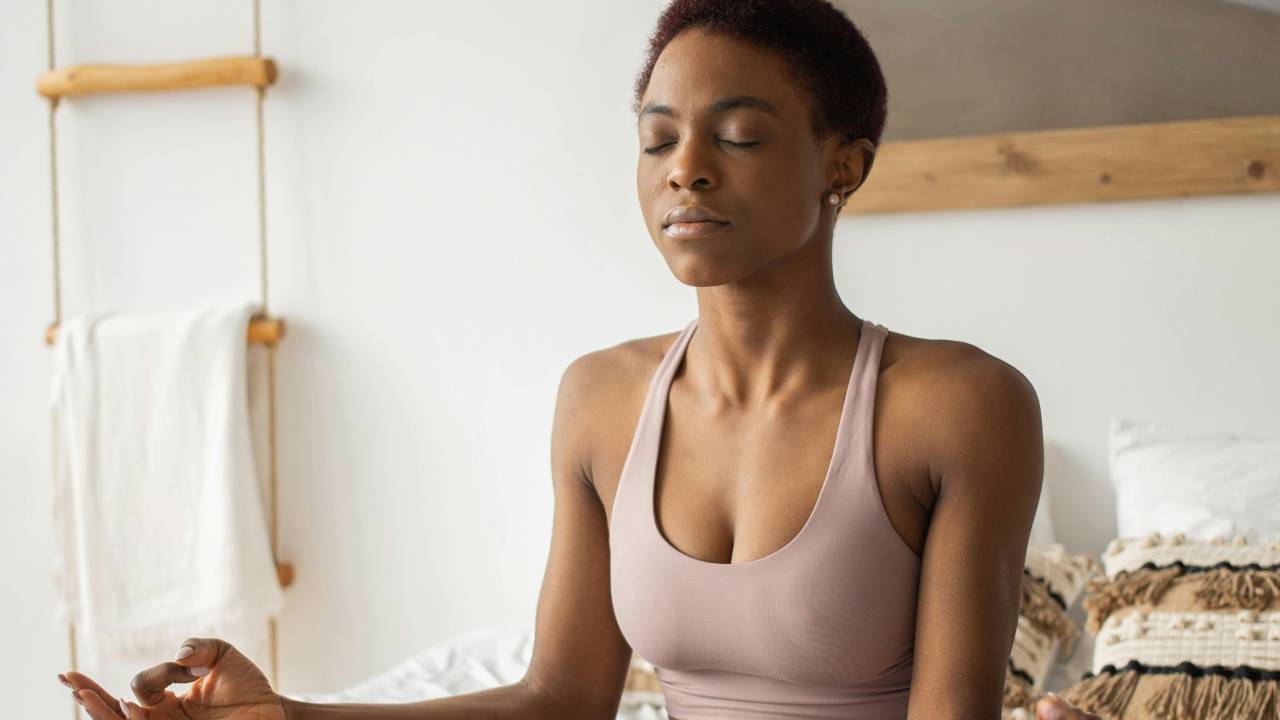
You want to ensure you’re in a comfortable seated position for this practice. Ensure your spine is straight so your diaphragm and abdomen can move easily. Kapalabhati involves short and sharp contractions of the abdomen on the exhale with a passive inhale. By sitting with the spine straight, you are ensuring you can easily pump the abdomen as well as allowing the diaphragm to move effectively.
Once you’re sat in a comfortable position with your spine straight, begin to practice inhaling and exhaling a little deeper than normal. Do a few rounds of this breathing to allow you to connect with your breath. You want your abdomen to be moving out on an inhale and drawing softly back towards the spine on an exhale.
Kapalabhati involves quicker breathing than you might be used to practicing in a normal yoga class. To get a feel for what your abdomen is doing during this breathing practice, it can be useful to place your hands on your abdomen. Try this first before completing a full round of Kapalabhati: inhale and sharply exhale while pulling your abdomen back towards the spine.
Allow the breath to leave through the nostrils — you may hear a sound like you’re blowing your nose (this should happen). Relax the abdomen and inhale through the nose. Do this again and again until you feel able to draw your abdomen back quickly towards the spine on your exhale. Your inhale should come naturally as soon as you relax your abdomen after the exhale. This is the basics of Kapalabhati.
(Image credit: Pexels)
To complete full rounds of Kapalabhati, quicken the breath and allow it to become more rhythmic with the inhale always remaining passive. This can take a while to accomplish so keep practicing as described above until you feel you can do this movement without much effort.
Traditionally, three full rounds of Kapalabhati are practiced in one sitting. For the first round, take 15 of these breaths and then a full exhale. Now, inhale deeply, leaving some space in your lungs, for a retention of breath. You can hold your breath for up to 30 seconds on this round. After holding your breath, empty your lungs on an exhale and inhale deeply. Exhale again. Now, inhale to start your second round of Kapalabhati.
Begin your quick and sharp exhales, drawing the abdomen towards the spine and allowing the breath and noise to come out of your nose. Continue, this time doing 30 breaths before a full exhale. Inhale deeply again, leaving space in your lungs, and hold your breath for up to 45 seconds. When you need to release your breath, exhale fully. Inhale and exhale again. Now, inhale to begin your third and final round of Kapalabhati. Begin those short, sharp breaths — this time taking 45 breaths before a full exhale. Inhale, with space in the lungs, for your final retention. This time you can hold your breath for up to one minute. When you need to release your breath, exhale fully. Take a few normal breaths before continuing with your day.
Once you’ve got the hang of Kapalabhati, you can begin to increase the number of breaths you do per round. For example, you may start with 45 breaths on your first round and increase to 100 by your final round. You can do more or less depending on how you feel. Make sure you don’t get lightheaded. It’s also important to note this practice isn’t safe during pregnancy.
Today’s best Yoga Mats deals
